
Menopause and Skin: Understanding the Changes and Adapting Your Routine at Each Stage
Menopause transforms the skin. It's a reality many women experience without being truly prepared. The changes are real, progressive, and often misunderstood.
At Onérique, we believe that understanding what's happening to your skin is the first step in skincare.
Here's what science says, step by step, and how to adapt your routine to navigate this transition with skin that remains healthy, nourished, and radiant.
Why does menopause affect the skin?
The skin is rich in estrogen receptors. These female hormones play an essential role in collagen production, maintaining hydration, and tissue elasticity. When their levels gradually decrease and then drop, the skin directly feels the effects: it becomes thinner, drier, less elastic, and its regeneration mechanisms slow down.
This is not accelerated aging. It's a hormonal transition that requires an adaptation of care, not a capitulation.
What are the three stages of menopausal transition?
The transition to menopause occurs in three distinct phases, each with its own skin manifestations and needs.
Perimenopause: the first signals (35 - 45 years old)
Perimenopause is the period when menstrual cycles are still present, but the first hormonal fluctuations begin to be felt. For the skin, the changes are subtle but very real: a slightly less radiant complexion, a texture that becomes less regular, hydration that occurs less naturally. It is often at this stage that women notice their usual routine starting to work less effectively, without immediately understanding why.
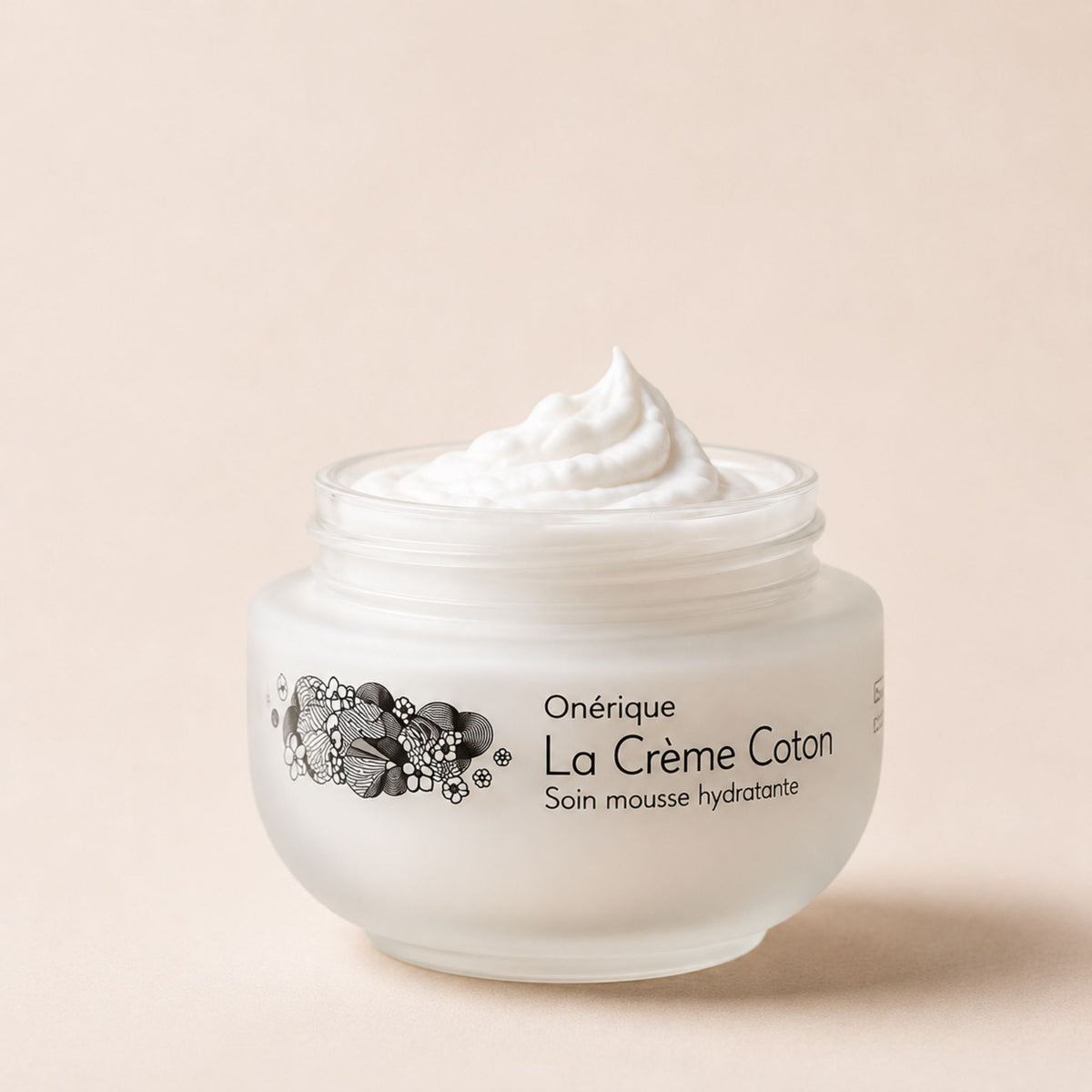
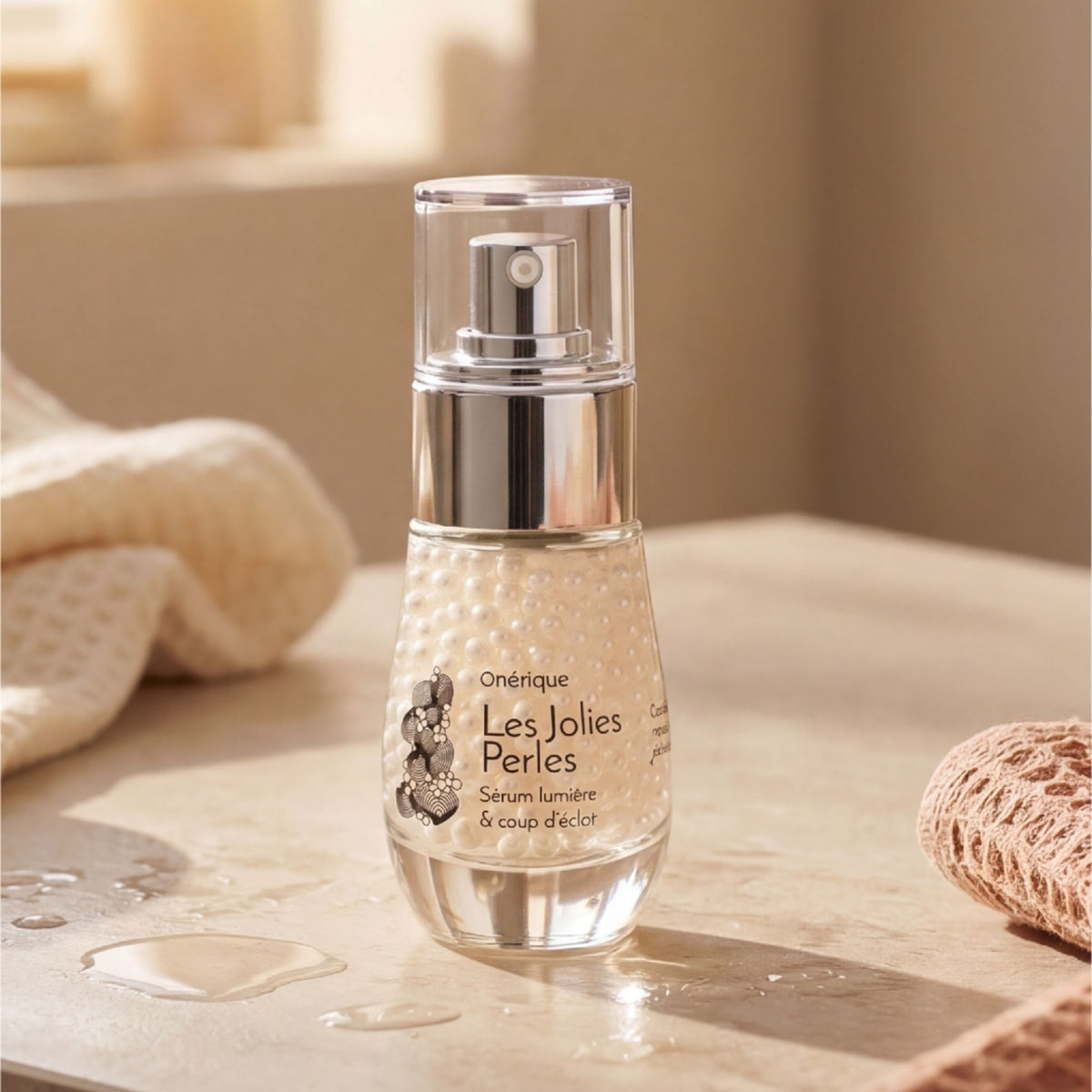
What the skin needs at this stage: radiance, protection, and light hydration. Les Jolies Perles, with their alginates that create a protective film against pollution and their illuminating marine active ingredients, provide an immediate boost while preparing the skin for what's next. La Crème Coton, with its light velvety texture and mattifying micro-pearls, moisturizes without overloading skin that is starting to become more demanding.
Menopause: the great transition (45 - 52 years old)
Menopause can last from two to ten years. It is the most intense transition phase, marked by significant hormonal fluctuations and various symptoms. On the skin, the effects become more visible: increased dryness, heightened sensitivity, appearance of redness, irregular pigmentation, and more pronounced first wrinkles.
Some women experience a resurgence of adult acne during this period, linked to a transient imbalance between androgens and estrogens. The skin barrier weakens, making the skin more reactive to products and climatic changes. What the skin needs at this stage: softness, purification, and deep regeneration. L’Eau Micellaire, with its marine water base, cleanses without aggressing an already weakened skin barrier. Le Masque Fraîcheur, rich in antioxidant green tea extract, detoxifying moringa, and revitalizing nasturtium flower extract, offers an intense care moment once a week to purify and rebalance. And at night, La Crème de Nuit with its peptides (Palmitoyl Tripeptide-1 and Tetrapeptide-7) and spirulina enhances cellular regeneration during the nocturnal repair window.
Menopause and beyond: nourishing and supporting firmness (52 years and older)
Menopause is officially declared after twelve consecutive months without periods. At this stage, the ovaries produce almost no more estrogen. The skin thins, sebum production decreases, and collagen degrades faster than it renews. Visible signs intensify: deeper wrinkles, loss of firmness, profound dryness, and skin that can appear dull or tired. Needs evolve further: richer formulas, active ingredients targeting firmness and deep nutrition become essential.
What the skin needs at this stage: intense nutrition, collagen support, and regular cell renewal. La Crème de Nuit, with its duo of peptides and regenerating marine active ingredients (Laminaria Digitata, hydrolyzed pearl, spirulina), directly addresses the slowdown in collagen production. La Caresse, with its shea and mango butters, nourishes the body's skin, often overlooked but equally affected by hormonal transition. And Le Fondant aux Cranberries, used once a week, eliminates dead cells that accumulate more during this period, revealing the natural radiance of renewed skin.
A special case: surgical menopause after an oophorectomy
Some women experience premature menopause not progressively, but suddenly, following an oophorectomy, which is the surgical removal of one or both ovaries. When this intervention occurs before the age of 40, the drop in estrogen is immediate and brutal, without the gradual transition period experienced in natural menopause.
For the skin, the impact is more intense and faster. The skin can lose up to 30% of its collagen within the first five years after menopause. In the case of surgical menopause, this process begins without preparation, often at an age when the skin has not yet started to adapt. Sudden dryness, accelerated loss of firmness, increased sensitivity, and a dull complexion can appear within weeks.
In this context, an adapted routine becomes even more essential. Active ingredients that support the skin barrier, stimulate collagen synthesis, and protect against oxidative stress, such as peptides, spirulina, and noble fatty acids, become particularly important. And the consistency of care partially replaces what hormones no longer naturally provide.
If you are going through this experience, know that a well-thought-out routine makes a real difference. And that your skin, even when challenged, remains capable of adapting with the right care.
Which active ingredients are particularly beneficial for menopausal skin?
The most documented active ingredients to support the skin during and after menopause are peptides, which stimulate collagen synthesis; antioxidants like spirulina and green tea extract, which protect against oxidative stress accelerated by hormonal fluctuations; remineralizing marine active ingredients like Laminaria Digitata, which strengthen the weakened skin barrier; and noble fatty acids like squalane, shea butter, and sweet almond oil, which compensate for the natural decrease in sebum.
What to remember about menopause and skin
Menopause is not a skin fatality. It is a transition that requires adaptation, not resignation. Understanding what happens at each stage, choosing targeted active ingredients, and adapting textures to the skin's actual needs allows you to navigate this period with skin that remains vibrant, nourished, and radiant.
Frequently asked questions about menopause and skin
At what age does skin begin to change with menopause?
The first skin changes related to hormonal fluctuations can appear as early as 35-40 years old, during perimenopause. The skin gradually loses luminosity and regularity even before the classic signs of menopause manifest. This is why adapting your routine early makes a significant difference in the long term.
Can dry skin during menopause be improved with topical treatments?
Yes. Menopause-related dry skin is primarily due to the decrease in essential lipids of the skin barrier and reduced sebum production. Skincare products enriched with noble fats (squalane, shea butter, sweet almond oil) and hydrating active ingredients (biosaccharides, hyaluronic acid) can significantly improve skin comfort and hydration.
Can you have acne during menopause?
Yes, and it's more common than often thought. During perimenopause, a transient imbalance between androgens and estrogens can cause a resurgence of adult acne. This phenomenon is temporary and can be alleviated with gentle purifying treatments that respect the weakened skin barrier.
Are peptides suitable for menopausal skin?
Yes, and they are among the most recommended active ingredients. Peptides like Palmitoyl Tripeptide-1 and Palmitoyl Tetrapeptide-7 stimulate collagen synthesis and inhibit enzymes responsible for its degradation, directly compensating for hormonal slowdown. They are well-tolerated, even by sensitive and reactive skin.
Do you need to change your entire skincare routine during menopause?
Not necessarily. The key is to adapt textures (richer), active ingredients (peptides, antioxidants, noble fatty acids), and the frequency of care (gentle daily cleansing, weekly detox gesture). A simple, consistent, and well-formulated routine is more effective than a multitude of products.