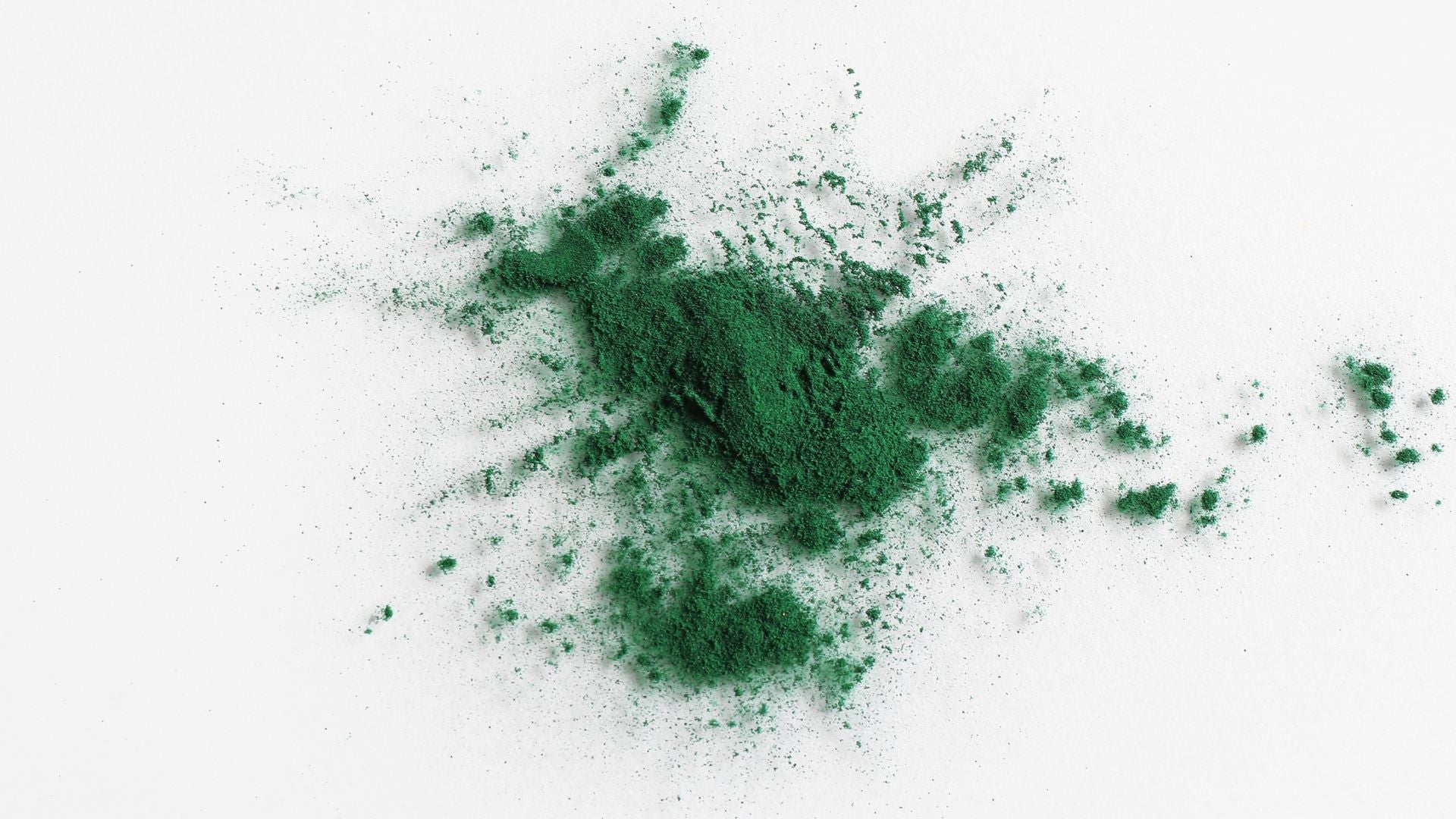
Spirulina and skin: what the sea really offers your skin
You come across it in organic food aisles as a green powder, in your morning smoothies, in nutritionists' speeches. Spirulina has become one of the most popular superfoods of the decade. But beyond its nutritional uses, spirulina also reveals remarkable benefits for the skin, benefits that cosmetics are only just beginning to seriously explore.
At Onérique, we have chosen to integrate spirulina into the heart of our Night Cream. Here's why.
What exactly is spirulina?
Spirulina (Spirulina Platensis) is a blue-green microalga that has thrived in warm, alkaline waters for over 3.5 billion years. It is one of the oldest living organisms on the planet, and one of the most nutrient-dense.
Its composition is exceptional: up to 60 to 70% complete proteins, 18 essential amino acids, B vitamins, vitamin E, beta-carotene, zinc, selenium, and especially phycocyanin, its characteristic blue-green pigment, and one of the most powerful antioxidants nature has produced.
What distinguishes spirulina from other marine active ingredients is its ability to act on several levels simultaneously: it nourishes, protects, regenerates and balances. A multifunctional active ingredient, in the most rigorous sense of the term.

The benefits of spirulina for the skin
1. A shield against oxidative stress
Oxidative stress is one of the main causes of premature skin aging. It is caused by free radicals, unstable molecules generated by pollution, blue light from screens, fatigue, and the sun. The phycocyanin contained in spirulina acts as a powerful free radical scavenger. It also contains superoxide dismutase (SOD), an antioxidant enzyme capable of neutralizing one of the most aggressive free radicals for the skin. The result: skin better protected against invisible daily aggressions, and slowed aging.
2. Support for collagen production
Spirulina contains all the essential amino acids for the synthesis of collagen, the structural protein that maintains skin firmness and elasticity. With age, collagen production naturally decreases. A scientific study published in 2025 shows that peptides extracted from spirulina significantly inhibit the enzymes responsible for the degradation of collagen and elastin. In other words: spirulina does not add collagen to the skin, it helps the skin to better preserve its own.
3. Deep hydration
Spirulina is rich in gamma-linolenic acid (GLA), a rare essential fatty acid that the body cannot synthesize on its own. This lipid plays a key role in maintaining the skin barrier, the protective layer that prevents the skin from dehydrating. Skin with an intact barrier retains water better, resists external aggressions better, and has a smoother, more comfortable texture.
4. A detoxifying and purifying effect
Applied to the skin, spirulina has the ability to absorb impurities and clarify the complexion. It helps tighten pores and even out skin texture, which explains its increasing use in purifying treatments and detox masks.
Topical spirulina vs. dietary spirulina: two complementary approaches
Spirulina can act on the skin through two distinct pathways, and ideally, the two complement each other.
In food use, it provides the body with the micronutrients necessary for cell regeneration: amino acids, vitamins, minerals. The skin, a living organ, benefits directly from this internal nutritional intake.
In cosmetic use, its active ingredients act directly on the superficial layers of the epidermis: antioxidant protection, skin barrier support, purifying action.
Spirulina is, perhaps, the ingredient that best summarizes this idea: what you choose to put on your plate and what you apply to your skin can tell the same story.
Why night is the ideal time for spirulina
The skin regenerates primarily at night, between 10 PM and 2 AM, when cellular activity is at its peak. It is during this window that topical active ingredients are absorbed most effectively, and when skin repair work is most intense.
Integrating spirulina into a night treatment means offering it the best conditions to act: resting, receptive skin that does not have to defend itself against external aggressions.
This is one of the reasons why we have chosen to integrate Spirulina Platensis into the heart of our Night Cream, alongside other marine active ingredients such as Laminaria Digitata and Biosaccharide Gum, which amplify its moisturizing and repairing action.
Key takeaways
Spirulina is not a trendy ingredient. It is an active ingredient rooted in science, with a history of billions of years and a composition that still fascinates researchers today.
For the skin, its benefits are real and documented: antioxidant protection, collagen support, deep hydration, purifying action. It embodies a certain idea of intelligent care, one that does several things at once, quietly, consistently.
Exactly what we strive to put into every Onérique formula.