Article: GLP-1 and skin: what effects on the face and how to care for it?
GLP-1 and skin: what effects on the face and how to care for it?
GLP-1 treatments for weight loss are widely discussed. Their effects on the face are discussed a little less. Yet, as the figure changes, the skin can also transform. Loss of volume, more pronounced features, skin sagging… What really happens and how can you support your skin during this period?
GLP-1: why is it talked about so much?
Ozempic, Wegovy, Mounjaro… These names have become familiar, far beyond the medical world. Developed to treat type 2 diabetes or, depending on the medication, to support the management of obesity, these treatments have profoundly changed the way we approach weight loss.
Their particularity? They act notably on the mechanisms that regulate appetite and satiety.
GLP-1 (glucagon-like peptide-1) is a hormone naturally produced by our body, notably after meals. Some medications mimic its action, while others, such as tirzepatide, act on two hormonal pathways, GIP and GLP-1.
But when weight loss becomes significant, sometimes rapid, its effects are not limited to the figure. The face changes too. And it is precisely this phenomenon that is raising so many questions today.
“Ozempic face”: why does the face sometimes appear to age?
The expression “Ozempic face” has made the rounds on social media. It refers to a face that appears more hollowed out, sometimes more tired, after significant weight loss.
Behind this somewhat sensationalist term lies a fairly simple phenomenon.
Our face naturally has fat compartments that contribute to its volume and the harmony of its contours. With age, these volumes already evolve gradually, while the skin loses some of its collagen and elasticity.
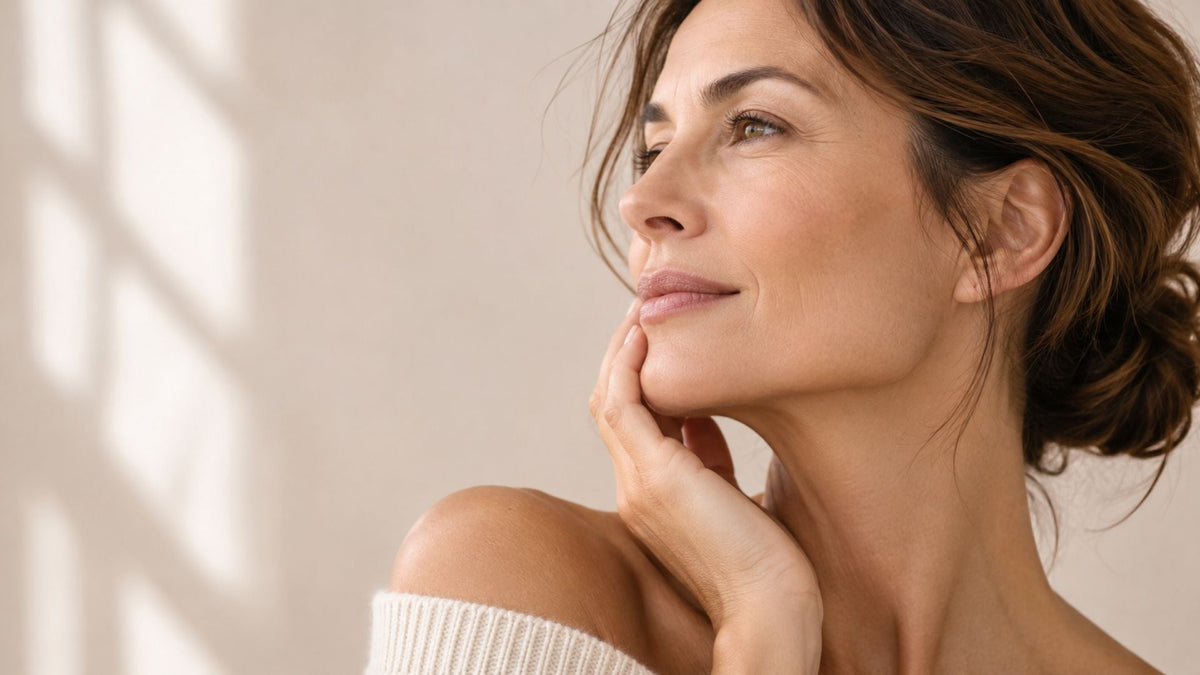
When we lose a lot of weight, facial fat can also decrease. The cheeks then appear less plump, the nasolabial folds sometimes become more visible, and the facial oval may seem less defined.
It is therefore not necessarily the medication that ages the skin, but largely the loss of volume that accompanies weight loss.
A scientific review published in Aesthetic Surgery Journal in 2026 looks precisely at these facial transformations and their relationship with weight loss.
And this phenomenon is not unique to GLP-1 treatments. It can also appear after significant weight loss achieved by other means.
It should also be remembered that not all faces react the same way. Age, genetics, skin quality, the amount of weight loss, and its speed play a role.
Does GLP-1 have a direct effect on the skin?
This is a question that researchers are beginning to explore more closely.
To date, scientific data does not allow us to state that GLP-1 medications directly accelerate skin aging. The majority of the observed aesthetic changes seem mainly related to weight loss and changes in facial tissues.
Some research is even looking at the potentially beneficial effects of these treatments on inflammatory mechanisms, notably in certain dermatological diseases.
A review published in Clinics in Dermatology in 2026 explores these different interactions between GLP-1 treatments and the skin, while highlighting the need for further research.
But it is still too early to draw general conclusions.
One thing is certain: the skin is a living organ, which evolves with our age, our environment, our diet, and the transformations of our body. When a major change occurs, its needs may also evolve.
Firmness, elasticity, hydration: what really changes
It is important to distinguish three concepts that are often confused: volume, firmness, and hydration.
Volume depends notably on the structure of the face and the distribution of fatty tissues. When it decreases, the contours can change. No cosmetic treatment can, on its own, replace this lost volume.
Firmness is linked, among other things, to the structure of the skin, collagen, and elastin. Over the years, their renewal naturally evolves, which contributes to the appearance of skin sagging.
Finally, hydration concerns the skin's ability to maintain its water balance. Well-hydrated skin generally appears more supple, more comfortable, and more radiant.
It is on this last aspect, as well as on the appearance and comfort of the skin, that a well-chosen cosmetic routine can make a real difference.
Because although we cannot prevent all facial transformations, we can continue to take care of our skin, day after day.
How to take care of your skin during weight loss?
There is no miracle routine, and that may be good news. Taking care of your skin should not become a new source of pressure.
A few simple habits can nevertheless accompany it.
Do not neglect nutrition
The skin needs nutrients to ensure its normal functions. Proteins, essential fatty acids, vitamins, and minerals notably contribute to maintaining its proper functioning.
However, GLP-1 treatments can considerably reduce appetite. It therefore becomes important to ensure that you maintain a sufficiently varied diet adapted to your needs, with the support of a healthcare professional if necessary.
Rely on regular hydration
Drinking enough water is essential for the proper functioning of the body. But to preserve skin comfort, hydration also involves the treatments applied daily.
Formulas containing moisturizing and emollient agents help limit water loss and maintain soft, supple skin.
Protect your skin from the sun
This is probably one of the most important steps, regardless of age.
UV rays contribute to premature skin aging and collagen degradation. Daily sun protection adapted to exposure therefore remains essential to preserve skin quality in the long term.
Choose suitable treatments, without multiplying products
When the face changes, the temptation can be great to accumulate serums, creams, and active ingredients in the hope of immediately regaining your previous appearance.
Yet, a short, regular, and well-formulated routine can be preferable to a succession of products that do not always meet the skin's needs.
The American Academy of Dermatology notably recommends paying attention to hydration, sun protection, and any skin changes during a GLP-1 treatment.
The essential thing is to prioritize hydration, comfort, and active ingredients whose cosmetic benefits are well documented.
And what about peptides in all this?
Peptides today hold an interesting place in the anti-aging care universe.
These small chains of amino acids are used in certain cosmetic formulations to act on the appearance of signs of skin aging.
Depending on their nature and formulation, some peptides can help improve the appearance of wrinkles and fine lines. However, their effectiveness depends on the peptide used, its concentration, and the formula in which it is incorporated.
They do not restore the facial fat volumes, but can find their place in a routine intended to take care of mature skin or skin whose appearance is evolving.
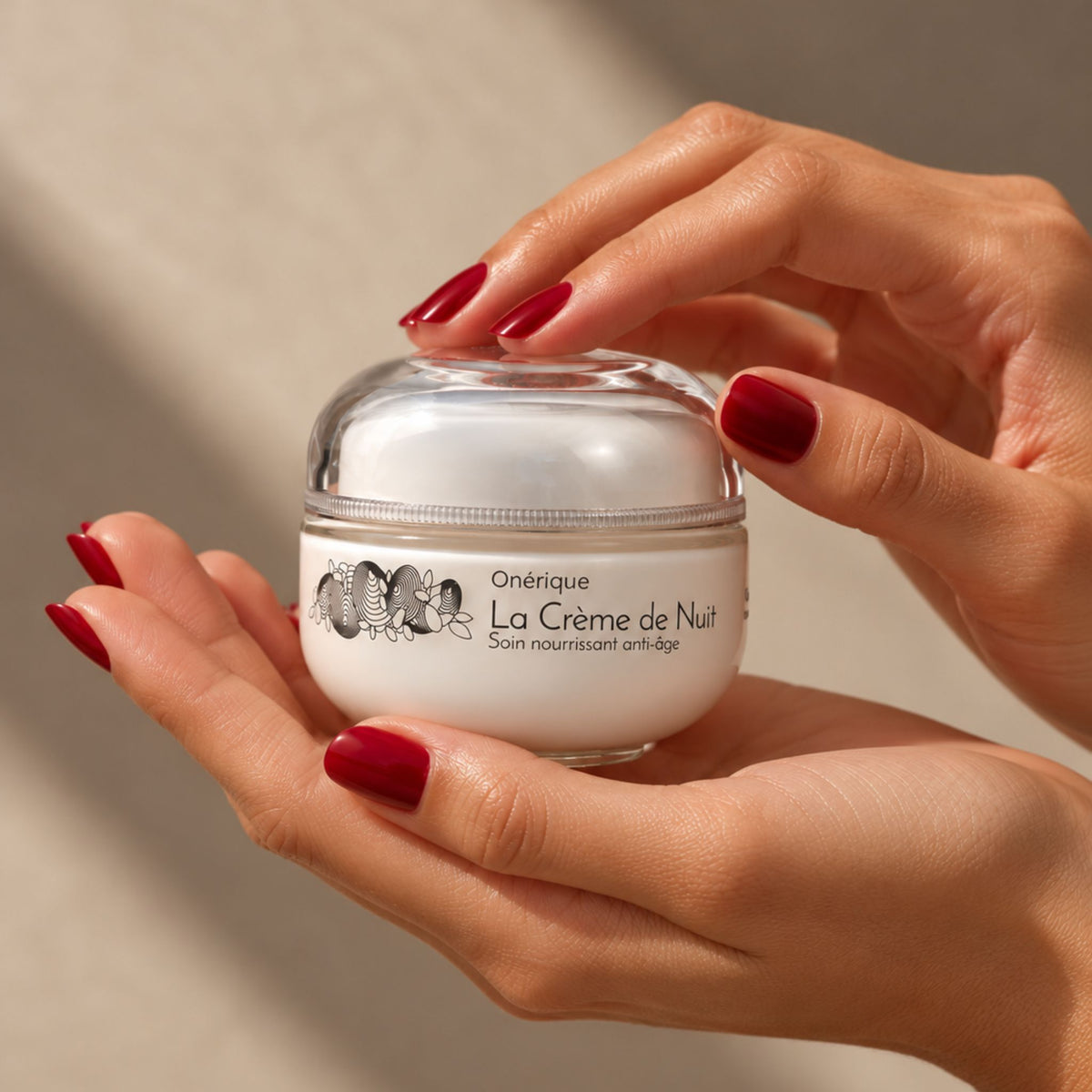
At Onérique, we chose to incorporate a combination of peptides, Palmitoyl Tripeptide-1 and Palmitoyl Tetrapeptide-7, in La Crème de Nuit, alongside squalane and a marine complex combining spirulina and Laminaria.
The idea is not to promise to regain the face of before, but to offer the skin a pleasant, nourishing treatment adapted to an evening routine.
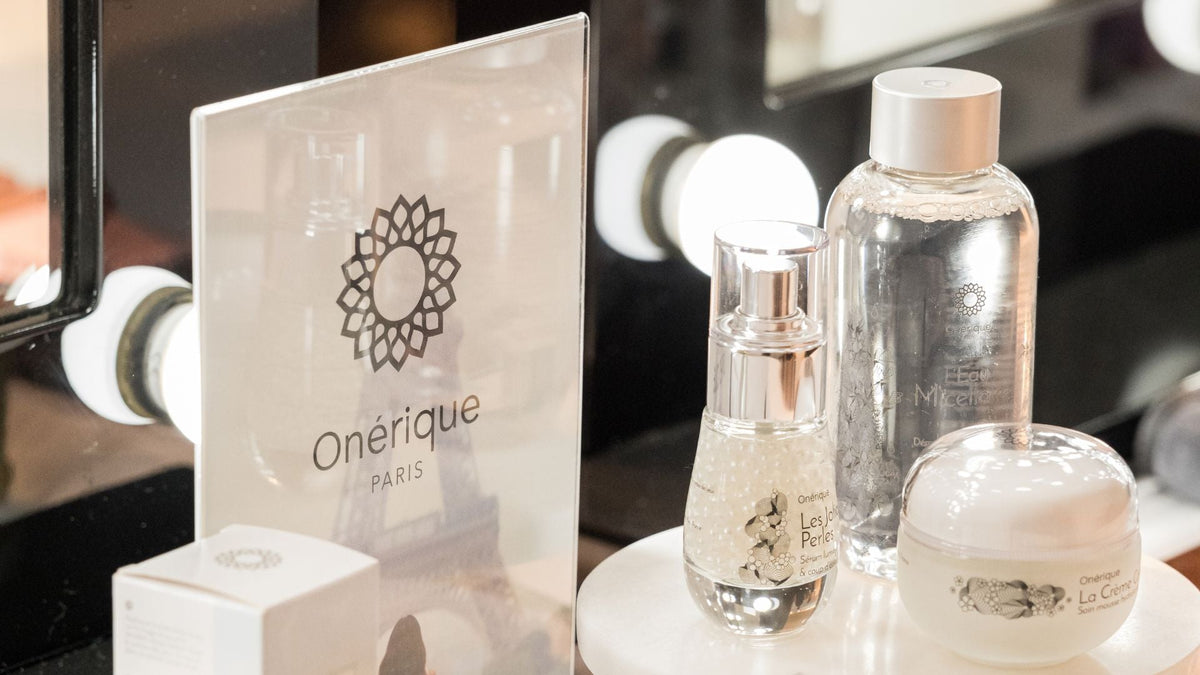
To complete this ritual, Les Jolies Perles, our oat polysaccharide serum, accompanies the skin by bringing it hydration, radiance, and a cosmetic tightening effect.
Two simple steps, to be integrated according to the skin's needs.
Should you consult a dermatologist?
If facial changes become a source of discomfort or concern, a dermatologist can help distinguish what is related to skin quality, loss of volume, or natural aging.
They can also explain the different management options, without necessarily resorting to aesthetic interventions.
In case of significant hair loss, unusual dryness, or other symptoms appearing during a GLP-1 treatment, it is also preferable to talk to the prescribing doctor. These manifestations can sometimes be related to rapid weight loss or insufficient nutritional intake.
What if we simply learned to support our skin?
Our face is not frozen. It evolves with the years, the seasons, emotions, and the different stages of our life. A weight loss can change certain features, sometimes unexpectedly. But these changes do not necessarily have to be perceived as imperfections to correct.
The essential thing is to understand what is happening, to respect the skin's needs, and to continue to give it attention.
Does GLP-1 cause wrinkles?
It is not established that GLP-1 medications directly cause wrinkles. On the other hand, significant weight loss can reduce facial volumes and make certain wrinkles or folds more visible.
Does the face regain its volume after stopping the treatment?
This depends on many factors, notably the evolution of weight, age, and facial structure. A return to the initial weight can change the volumes, but there is no guarantee that the face will regain exactly its previous appearance.
Can facial sagging be prevented during weight loss?
It is not always possible to prevent it completely. A suitable diet, regular sun protection, and moisturizing treatments can help preserve skin quality, without preventing facial volume loss.
What cream to use during a GLP-1 treatment?
There is no cream specifically necessary for people following a GLP-1 treatment. The choice depends above all on the skin type and its needs: hydration, comfort, nutrition, or improvement of the appearance of wrinkles.
This article is provided for informational purposes and does not replace medical advice. GLP-1 treatments must be used within the framework of appropriate medical follow-up.